Quick Answer
Lanzarote wins if you want something that feels genuinely unlike anywhere else: volcanic landscapes, interesting architecture, good food, wine grown in lava. Fuerteventura wins if you want the best beaches in the Canaries and reliable winds for kite surfing. The good news is you don’t really have to pick — the ferry between them takes 35 minutes. A lot of people do both.
They Look Nothing Like Each Other
The single biggest thing people get wrong about this comparison is assuming the two islands are basically the same. They’re not.
Lanzarote is volcanic. Properly, dramatically volcanic. Timanfaya National Park covers about 50 square kilometres of lava fields where nothing grows and the ground still radiates heat. There’s a spot where they pour water into a pipe in the rock and steam shoots out. The whole place looks like a film set for something set on Mars. The first time you drive through it, you go quiet.
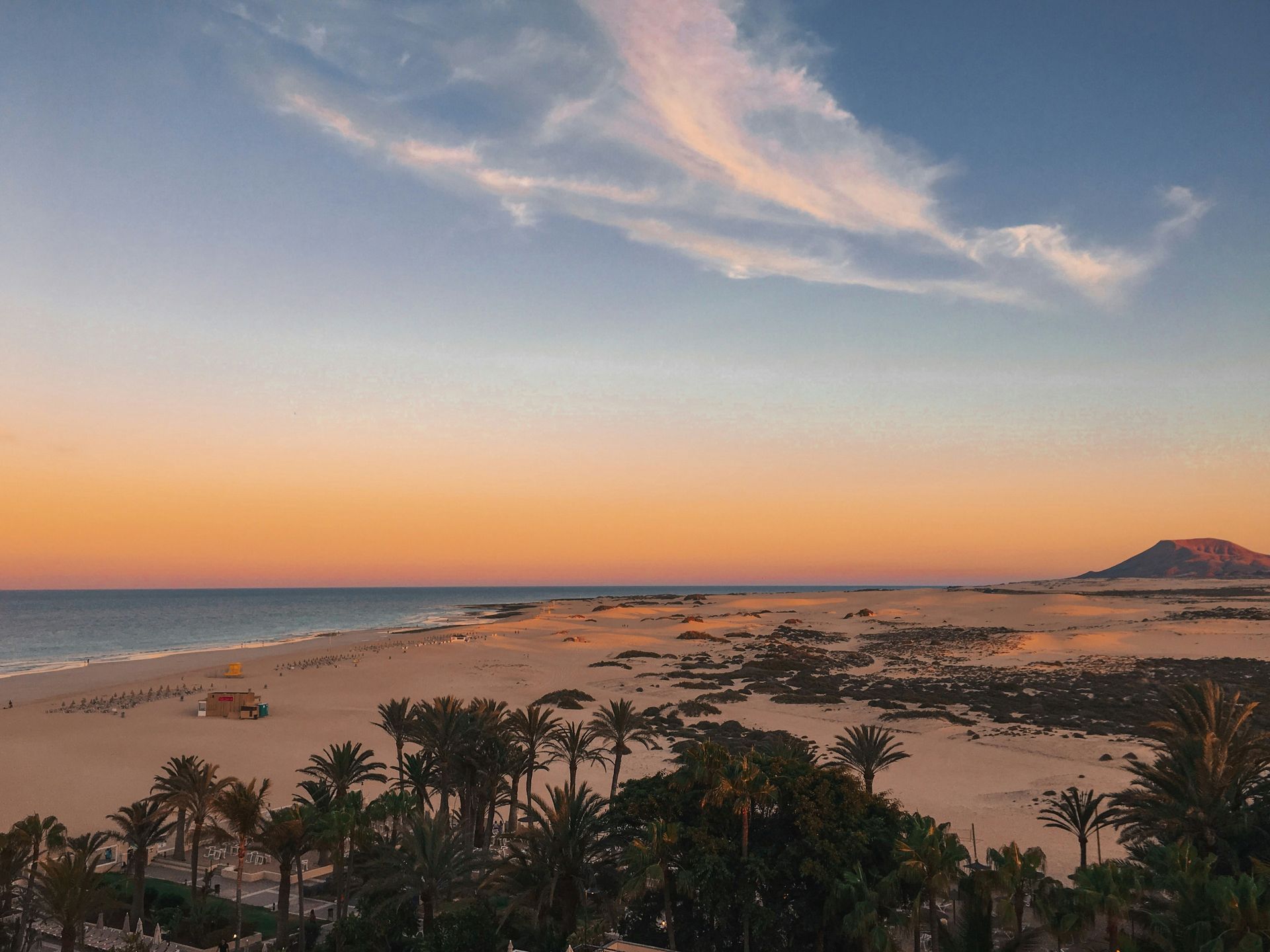
Fuerteventura is the opposite of all that. Flat, arid, golden. The Corralejo Dunes Natural Park in the north is genuinely spectacular — proper Sahara energy, white sand as far as you can see — and the island is much bigger than most people expect. But there’s no centrepiece. Nothing you’ll go quiet for.
Both landscapes are good. Just very different moods.
Beaches
This is Fuerteventura’s strongest argument and I’ll give it to them.
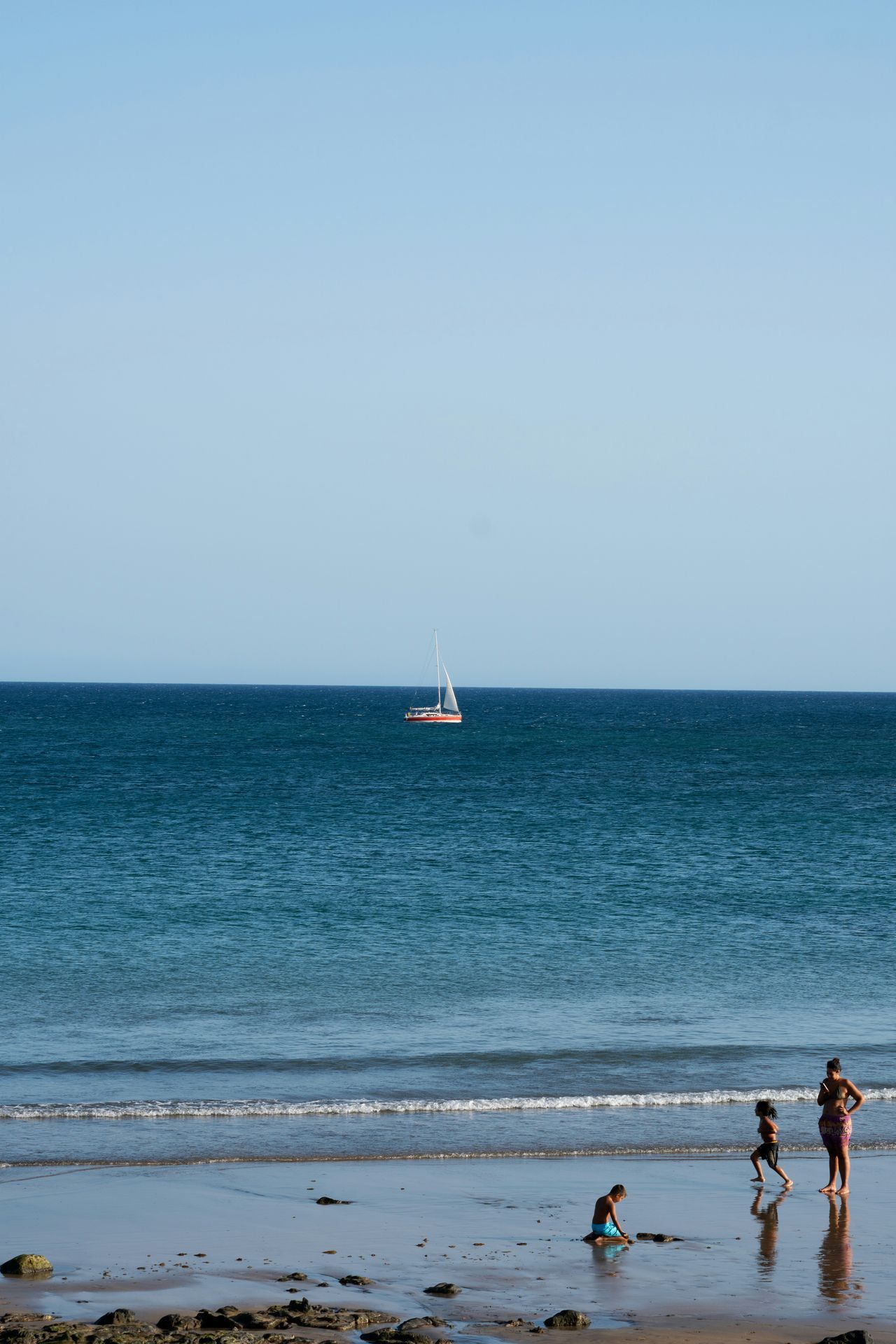
The beaches are longer, wider, and more numerous than anything Lanzarote has. Corralejo in the north has kilometres of white sand with dunes rolling behind it. Sotavento in the south hosts the World Windsurfing Championships, which tells you everything about the conditions. The east coast generally is sheltered, calm, and good for swimming.
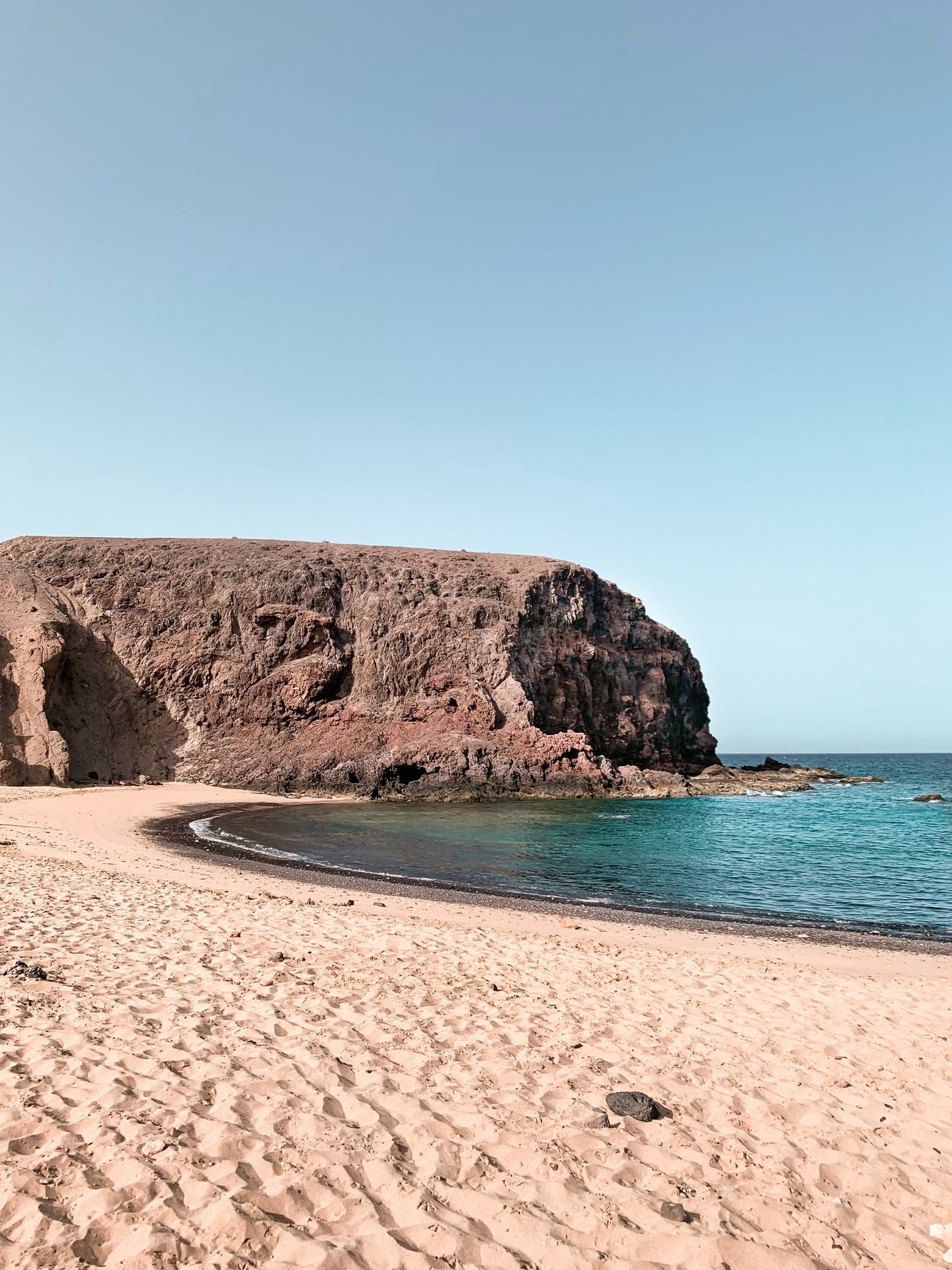
Lanzarote has Papagayo — five sheltered coves in a natural park in the south, the water is genuinely turquoise, yes it’s as good as the photos — and Famara in the northwest, which is the wide, wild, slightly moody one I’d personally choose. But beaches aren’t the reason to come to Lanzarote. They’re part of what makes it good, not the whole point.
Local tip: Papagayo charges a small fee to drive in, about 3 euros. The first coves fill up fast. Keep walking past them. The further from the car park, the better the beach.
Wind Sports
If this is the reason you’re going, the answer is Fuerteventura. The end.
The trade winds are consistent in a way that’s made the island properly famous for it. Kitesurfing, windsurfing, foiling — the infrastructure is all there. Schools, hire shops, competitions. People plan entire trips around it, and they’re not wrong to.
Lanzarote has Famara for surfing (the break at the base of the cliffs is excellent) and some good diving near Jameos del Agua in the north. But it’s not set up for wind sports the way Fuerteventura is. Different strengths.
The César Manrique Thing
This is what most people don’t know before they come to Lanzarote, and honestly it might be the most interesting difference between the two islands.
César Manrique was born here. He was an artist and architect who spent decades fighting to stop Lanzarote ending up like every other overdeveloped Canary Island resort. He designed incredible public spaces — the Jameos del Agua, which is a bar and concert hall built inside a volcanic cave system and is properly jaw-dropping; the Mirador del Río, a clifftop viewpoint that doesn’t look like a viewpoint; the Cactus Garden, which sounds like it shouldn’t work and completely does. He also lobbied for planning laws that changed what the island became. No building can be more than two storeys in most areas. Everything has to be white with green or blue shutters. No advertising hoardings. No fast food logos on the skyline.
Because of him, Lanzarote looks like Lanzarote. Coherent. Like someone actually cared.
Fuerteventura has Betancuria, a pretty old village in the hills worth a couple of hours. And that’s roughly it, architecturally. Not a criticism — just a fact.
Local tip: The Fundación César Manrique is where he actually lived, inside five volcanic bubbles connected underground. The house is astonishing. Go even if art isn’t your thing — especially if art isn’t your thing.
Food and Wine
Lanzarote wins this one too, and I didn’t expect to be writing a whole section about it.
The island has its own wine. Malvasía grapes grown in volcanic soil inside little stone walls called zocos, which protect them from the wind. The wines are actually good — not in a “local wine, how charming” way but genuinely, properly good. The fish is excellent. And because there are enough independent restaurants that take their food seriously, eating here ends up being one of the pleasures of the trip rather than just a thing you do between activities.
Fuerteventura has food. It’s fine. The local goat’s cheese, queso majorero, is famous and worth trying. But as a food destination, it doesn’t compare.
The Ferry
Fred Olsen and Naviera Armas both run ferries from Playa Blanca in the south of Lanzarote to Corralejo in the north of Fuerteventura. Thirty-five to forty minutes. Tickets are about 25 to 40 euros return and there are several crossings a day. It’s easy enough that plenty of people do it as a day trip. A lot of visitors base themselves on one island and use the ferry to get a day on the other.
Worth knowing before you start agonising too hard about which island to pick.
FAQ
Which island is better overall, Lanzarote or Fuerteventura?
Depends what you’re after. For landscape, architecture, food and a destination with a real identity, Lanzarote. For beaches, water sports and more affordable sun, Fuerteventura. Most people who’ve done both have a soft preference but it’s rarely a strong one.
Can I visit both Lanzarote and Fuerteventura in one trip?
Easily. The ferry from Playa Blanca to Corralejo takes under 40 minutes. Plenty of people do a split stay — four nights on one, three on the other — or just pop over for a day. Both islands have their own airports too, so you can fly in from one end and out the other.
Which is better for families with young children?
Both work well. Lanzarote has more to do that isn’t beach-based: Timanfaya goes down well with kids (the steam-from-a-pipe thing, the camel rides, the restaurant that cooks over volcanic heat), and the Jameos del Agua is genuinely exciting for them. The beaches around Playa Blanca are calm and sheltered. Fuerteventura’s east coast beaches are very gentle for small ones.
Is Fuerteventura cheaper than Lanzarote?
Slightly. Accommodation is generally more affordable, especially for packages. Lanzarote’s boutique end pushes the average up.
Is Lanzarote actually green or is it all lava fields?
Both. The lava landscapes are real and they’re dramatic. But the north of the island gets proper rainfall and is genuinely green. La Geria, the wine region, has this strange beautiful landscape of black volcanic soil with vines in it. The photos online mostly show Timanfaya, which is the extreme version.
How windy is Fuerteventura?
The name literally means strong winds and it earns it, especially in summer. The south of the island is more sheltered. If wind bothers you, go in spring or book on the west coast.
Is nightlife a reason to pick one over the other?
Not really. Puerto del Carmen in Lanzarote has a strip with bars and clubs. Corralejo in Fuerteventura gets lively in summer. Neither is going to change your life.
Which has better food and drink?
Lanzarote, comfortably. The local wine is the standout — try the Malvasía whites from La Geria. If wine matters at all to you on holiday, that alone is worth factoring in.
To Wrap Up
Most people who’ve been to both have a soft spot for Lanzarote. Not because it’s objectively better at everything, but because it surprises you. You go expecting a beach holiday and come back having driven through a moonscape, stood in a cave bar, drunk wine grown in black volcanic rock, and looked at architecture that actually made you stop and think. That’s a different kind of trip to most.
Fuerteventura is excellent if you know what you want. Big beaches, open space, reliable wind, not much else to worry about. No complaints at all.
If you’re still genuinely torn, take the ferry one afternoon and see what you think. You’ll have a pretty strong opinion by the time you get back.
Use VidodoGuide to explore Lanzarote with GPS audio routes, local stories and what is happening on the island — and spend less of your holiday figuring out where to go next.