21.09
Discover Teguise Market: A Gem in Lanzarote
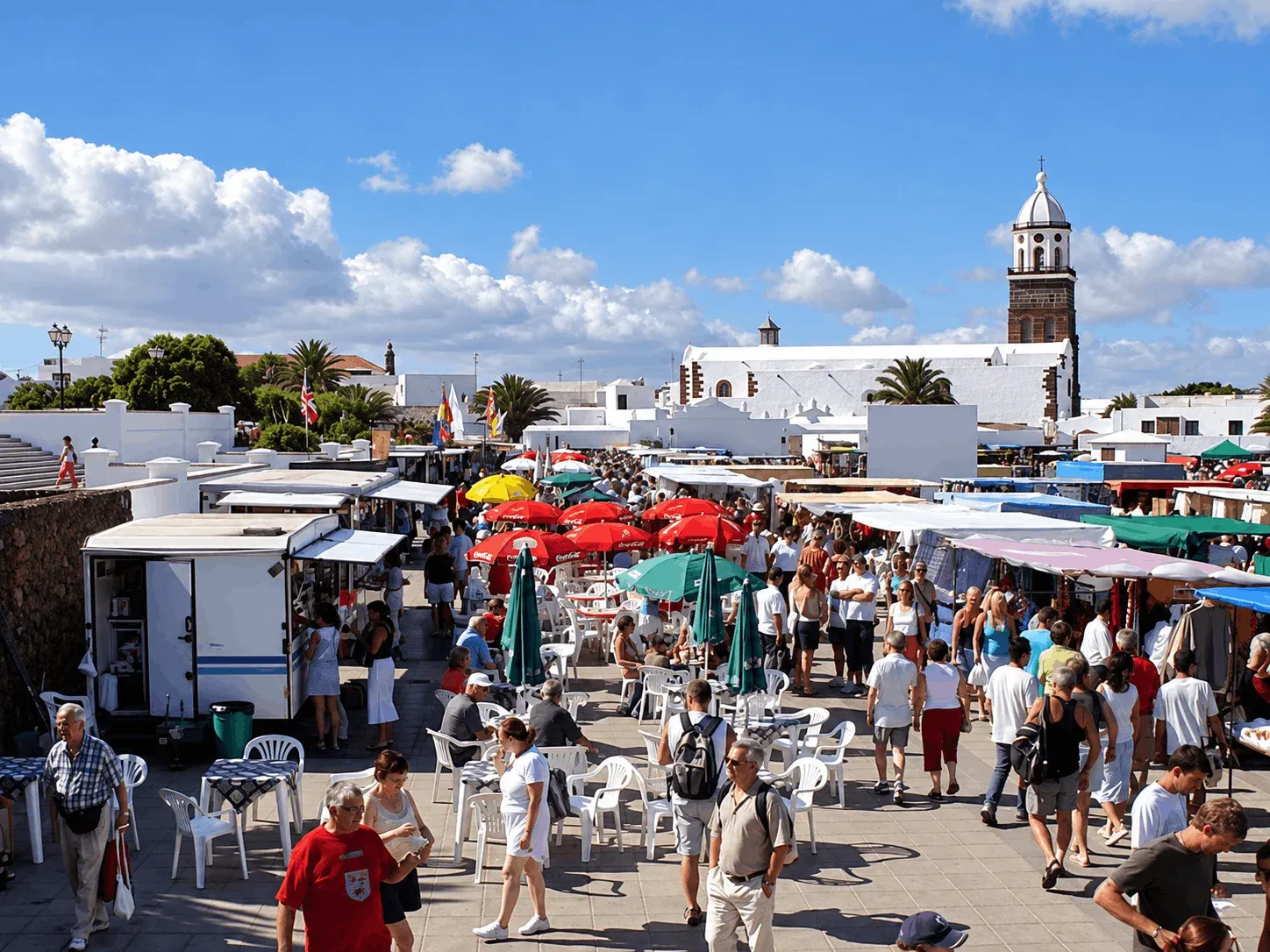
Teguise Market is the largest Sunday market in the Canary Islands, operating from 9 AM to 2 PM in the town of Teguise.
Quick Answer
If you have time for three stops: Jameos del Agua, Mirador del Río and the César Manrique Foundation in Tahíche. For a longer visit, add Jardín de Cactus, the Casa-Museo in Haría, Casa-Museo del Campesino and Castillo de San José. The northern attractions group naturally into one day. Tahíche and the rest belong to a different route.
1. Jameos del Agua: Art Inside a Lava Tube
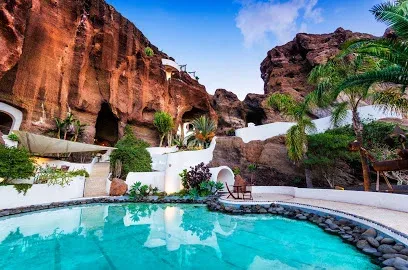
Jameos del Agua occupies part of the lava-tube system formed by Volcán de la Corona. Manrique and his collaborators turned the natural opening into a cultural space without concealing its volcanic origins. That last part is the whole idea and also why it works.
Descend past the underground lake, emerge into an open-air chamber where a white pool sits against black rock, look for the natural auditorium. The project was a collective effort involving Jesús Soto and Lanzarote craftspeople, not Manrique working alone. This is worth knowing because the result makes more sense when you understand it was not one person imposing a vision on a landscape but several people trying to work with one.
This is the right place to start if you have never seen a Manrique site before. Everything that follows will make more sense after you have spent an hour here.
2. Mirador del Río: A Viewpoint Hidden in the Cliff
At the island's northern tip, Mirador del Río is set into the cliffs overlooking the sea and La Graciosa below. Manrique conceived a building that would be barely visible from outside. Inside, two curved windows frame the view in a way that makes you understand why the building had to be invisible. If the building competed with the view you would notice the building. You do not notice the building.
Take your time at the windows before stepping onto the terrace. The viewpoint opened in 1973 and was developed with collaborators including Eduardo Cáceres and Jesús Soto.
3. César Manrique Foundation: His Lava-Field Home
The César Manrique Foundation in Tahíche was the artist's home from 1968 to 1988. Its lower floor incorporates five natural volcanic cavities linked by tunnels carved through the lava. White interiors, greenery, colourful details and black basalt all occupy the same space. His former studio is now an exhibition room.
If you want to understand his ideas about how people can live with a volcanic landscape rather than against one, start here rather than at one of the public attractions. The house makes the philosophy legible in a way the larger projects sometimes do not.
The Foundation offers a combined ticket for the Tahíche and Haría homes. Check the official Foundation visitor page for current details before you go.
4. Jardín de Cactus: A Quarry Transformed
In Guatiza, Manrique turned a former quarry into Jardín de Cactus. The terraces are the shape of the quarry because the quarry is still there. The cacti and the dark volcanic walls do something together that is genuinely difficult to describe and much easier to just go and see.
Even if gardens are not your thing, the shapes and colours make this worth stopping for. You do not need to know a single cactus species to appreciate what was done with the space. The quarry was the point.
5. Casa-Museo César Manrique: His Later Home in Haría
Manrique moved from Tahíche to Haría in 1988 and lived there until his death in 1992. The northern valley setting is completely different from the volcanic south and the house reflects that. A separate studio preserves his painting materials, easels and unfinished works.
Visiting both houses gives you something that neither one gives you alone: the sense that the same person made very different choices depending on where he was. That is more interesting than it sounds.
6. Casa-Museo del Campesino: A Tribute to Rural Life
Near Mozaga, Casa-Museo del Campesino is a tribute to the people who farmed Lanzarote before tourism arrived. Manrique's Fecundidad sculpture stands at the entrance. Admission is free. It is not the most dramatic site on this list and it is worth visiting for exactly that reason.
This one is useful for understanding why Manrique cared about the island's culture and not just its landscape. The farmers who worked the volcanic soil before anyone called it beautiful are part of the same story.
7. Castillo de San José: Art in a Historic Fortress
In Arrecife, an eighteenth-century fortress houses the International Museum of Contemporary Art. Manrique helped convert it into a gallery. He did not design the original castle, which is worth saying because most visitors assume he did. The museum opened in 1976 and the combination of old military architecture and contemporary art is stranger and more interesting than it should be.
Visit for the collection and the unusual setting, then use it as a reason to explore more of Arrecife rather than treating the capital as just the airport city. It has more going on than most visitors notice.
How to Plan Your Visits
Group Jameos del Agua, Mirador del Río, Jardín de Cactus and Haría into a northern Lanzarote day. Visit the Foundation in Tahíche and Casa-Museo del Campesino while exploring the centre of the island. Save Castillo de San José for your Arrecife plans.
A note on Cueva de los Verdes: it shares the La Corona lava-tube system with Jameos del Agua but its visitor adaptation was led by Jesús Soto, not Manrique. It is worth visiting but it is a separate attraction and a separate booking. Check current CACT ticket arrangements before you travel as general visits may benefit from advance purchase.
Book Timanfaya and Cueva de los Verdes online for a specific date and time. Other CACT centres do not currently require timed reservations but check before travelling as arrangements can change.
Frequently Asked Questions What is César Manrique famous for in Lanzarote?
Bringing art, architecture and the volcanic landscape together in projects such as Jameos del Agua, Mirador del Río and Jardín de Cactus. Also for helping shape the island's visual identity through his opposition to overdevelopment, which is why Lanzarote looks the way it does today.
Which César Manrique attraction should I visit first?
Jameos del Agua is the strongest introduction to his public work. For insight into his personal design ideas and the thinking behind everything else, visit the Foundation in Tahíche first.
Can you visit César Manrique's house?
Yes, both of them. His Tahíche home is now the Foundation. His later home in Haría is the Casa-Museo César Manrique. A combined ticket is available for both.
Did Manrique design Cueva de los Verdes?
No. Jesús Soto led the cave's adaptation for visitors. Cueva de los Verdes and Jameos del Agua are separate attractions within the same volcanic tunnel system. Worth visiting, not a Manrique project.
Is Casa-Museo del Campesino free?
Yes, admission to the museum complex is free. Restaurant meals and other experiences are separate.
Can you see all seven places in one day?
You would be rushing and missing the point. Group the northern attractions together and save Tahíche, Campesino and Arrecife for a different day. Two days covers all seven properly.
To Wrap Up
Manrique's work changes how you look at Lanzarote. The caves become architectural spaces. Cliffs frame views that seem designed for them. Volcanic rock becomes part of a home rather than something to build around. None of it is accidental and none of it is subtle once you know what you are looking for.
The best version of a Lanzarote holiday includes at least one day spent following his work. The island makes considerably more sense after it. Most people leave wishing they had done it earlier in the week.


 Keep exploring
Take your next discovery beyond the article. Find GPS audio routes, local events and places worth a stop — all in the Vidodo Guide app.
Explore in Vidodo Guide