Renting a car in Lanzarote is most useful when you want to combine places that do not share a convenient bus route. A beach holiday based around one resort may need only a few days of hire. A stay in a village, with regular outings around the island, gives the car a more central role.
Before comparing the headline price, decide which journeys you actually want to make. Then check the rental terms for the driver, the roads and any ferry crossing involved. A low quote is only useful if the agreement allows the holiday you have planned.
Do you need a car for the whole stay?
A full-stay rental can make sense when your accommodation is away from a walkable centre or you expect to explore on most days. It also avoids collecting and returning a vehicle halfway through the holiday, though parking and the airport return become your responsibility.
For a resort-based week, consider grouping your driving days. You might spend the opening days locally, hire a car for a northern outing and a separate volcanic day, then return it before the final beach days. Compare the actual quotes: a short rental is not automatically cheaper once collection arrangements and transfers are included.
Use our five- and seven-day Lanzarote itineraries to see which outings belong together. Keep booked admission times and your starting base in view. The distance between two places is only one part of the day; parking, walking, meals and the visit itself also take time.
Check the driver’s eligibility before paying
Legal permission to drive and a company’s rental conditions are separate checks. The DGT guidance on licences valid in Spain explains the position for EU/EEA and other foreign licences. Check the rule for the country that issued yours, rather than assuming an international driving permit is always required or never needed.
For visitors with a UK photocard licence, UK government travel advice confirms it can be used in Spain. Provisional licences are not valid. Residence in Spain raises separate questions from a holiday visit.
The rental company can set its own minimum age and licence-holding period. For example, CICAR’s published conditions specify a minimum age of 21 and a licence held for at least two years. That example does not establish the rules for every supplier or every vehicle group.
Check the documents for each person who will drive, the accepted payment method and whose name must appear on the card. If an additional driver is part of the plan, include them in the agreement before they take the wheel. Save the booking terms as well as the confirmation number.
Compare insurance, deposits and fuel separately
The phrase “fully insured” leaves several questions unanswered. Read what is covered, what is excluded, whether an excess applies and what you would need to do after damage or a breakdown. Check whether any protection is provided by the rental company itself or by a separate reimbursement policy that requires you to pay first and claim later.
| Part of the quote |
Question to answer before booking |
| Damage cover |
What excess applies, and which parts of the car or circumstances are excluded? |
| Deposit |
Is money charged or held, which card is accepted, and when is it released? |
| Fuel |
What level must you return, and is there a separate fuel deposit or service charge? |
| Drivers |
Who is authorised, and is an additional driver included? |
| Collection and return |
Where is the car, what are the opening hours, and what happens after a flight delay? |
| Child seats and equipment |
Is the requested equipment confirmed, suitable and included in the price? |
Zero excess does not remove every contractual exclusion. AutoReisen’s terms, for example, distinguish its basic cover from exclusions involving items or circumstances such as tyres, keys, wrong fuel and use on prohibited surfaces. Read the version attached to your own booking and ask for clarification where the wording affects a planned journey.
Fuel arrangements deserve their own check. CICAR’s published terms describe a fuel deposit and returning the vehicle at the corresponding fuel level. Do not apply that policy to another company. Photograph the gauge at collection, understand the return requirement and allow time to refuel if needed.
Inspect the car before leaving the pickup area
Walk around the vehicle with the condition report in hand. Photograph existing marks, wheels, glass and any damage inside, and ask the supplier to record anything missing from its report. Keep the images until the rental has been closed and any deposit resolved.
Before moving off, adjust the seat and mirrors, locate the lights and wipers, and check how to select reverse. Enter the first destination while parked. If you requested an automatic, child seat or other essential equipment, resolve a mismatch before accepting a departure that does not suit you.
Ask where the breakdown number and vehicle documents are kept. For a Spanish-registered hire car, also ask staff to show you the emergency warning device. Since 1 January 2026, the required warning device is a certified connected V16 beacon; the DGT’s V16 guidance explains the requirement and lists approved models. Familiarity with it is more useful than discovering the equipment during a roadside problem.
Driving rules that deserve attention on a first visit
Spain drives on the right. Follow the posted speed limit and adjust to the road, visibility and conditions; a navigation app’s estimate is not a target arrival time.
At roundabouts, traffic already circulating generally has priority. Prepare your position for the exit and signal appropriately. If you cannot reach the outer lane safely before your exit, continue around instead of cutting across another vehicle. The DGT’s basic road rules cover roundabouts, seatbelts and child restraints.
Children 135 cm tall or shorter normally need an approved restraint in a rear seat, with limited legal exceptions. Give the supplier the information needed to provide a suitable seat and check its installation before leaving. A booking note that says “child seat” does not establish that the equipment will fit your child.
On unfamiliar roads, leave room to react to cyclists, turning vehicles and changes in the road’s width. Stop only where parking or stopping is permitted and the vehicle is fully clear of moving traffic. If you miss a viewpoint entrance, continue to a suitable place to turn rather than braking or reversing abruptly.
For an evening involving alcohol, arrange another way home. That also removes the need to judge a drink against a legal limit you may not know accurately.
Papagayo: check the contract before the access track
Papagayo needs a specific conversation with the hire company. The access routes through Los Ajaches include unpaved tracks, as described in Yaiza’s council notice about maintaining the Papagayo approaches. Ask whether your agreement permits the intended access road and whether cover remains valid there.
AutoReisen’s published conditions prohibit use on unsurfaced roads. Other companies may word their restrictions differently. The fact that another hire car is using a track does not establish permission for yours, and choosing a larger vehicle does not change the agreement.
If the supplier does not permit the journey, plan a different way to visit or choose another beach. Do not rely on a verbal assumption that a public access road must be covered. Our Papagayo beach guide covers the wider visit; confirm current access conditions and your contract before setting off.
Can you take a rental car on the ferry?
Check with the rental company before buying a vehicle ticket. A ferry operator accepting cars does not mean your hire agreement permits the crossing. Ask about the destination island, the dates, written authorisation and breakdown cover away from Lanzarote.
AutoReisen’s FAQ, for example, says vehicles must not leave the island where they were hired without an individually agreed exception. Baleària’s vehicle guidance also makes rental-company permission relevant to travel with a hire car.
Compare taking the car with travelling as a foot passenger and arranging transport separately on the other island. Our guide to ferry journeys with a car from Lanzarote is a starting point for the options; your current rental agreement determines what you can book.
Parking and attraction access
Check signs at the place where you park, including payment periods, restrictions and marked reserved spaces. An apparently empty space is not evidence that parking is allowed. Ask your accommodation how its parking works before arrival, particularly if access involves a gate or a separate entrance.
At Montañas del Fuego, driving gets you to the authorised visitor area. The Ruta de los Volcanes itself is the attraction’s coach circuit. CACT’s current ticket instructions require an online dated time slot and arrival 15 minutes beforehand; they also prohibit stopping or getting out between the entrance and Islote del Hilario. A hire car does not give independent access around the circuit.
Keep the first drive simple
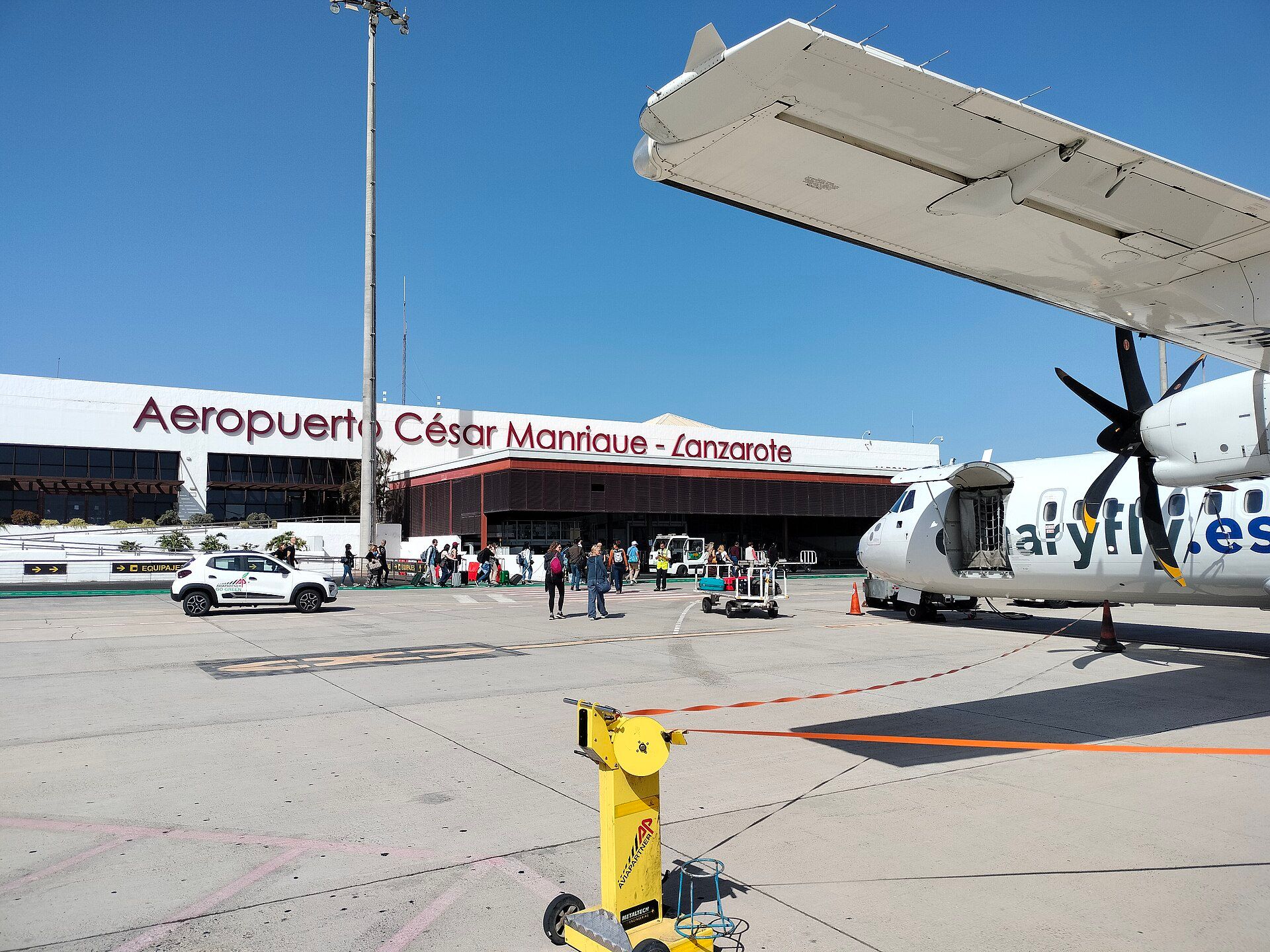
For an airport pickup, make your accommodation the first destination unless there is a clear reason to stop elsewhere. Check in, unload and learn how the property’s parking works. If you still want an outing, choose one nearby place with straightforward parking and an easy return.
On later days, put the fixed booking first and build the rest of the route around it. Leave a gap for lunch and accept that a stop may need to be dropped. Before the return flight, check the rental return entrance, refuelling requirement and key-handover procedure; do not navigate only to the terminal.
With the car and booking arrangements settled, compare Vidodo’s Lanzarote routes with the time you have available. Choose a route that fits your starting point and admission reservations, then set it up before driving.
Sources
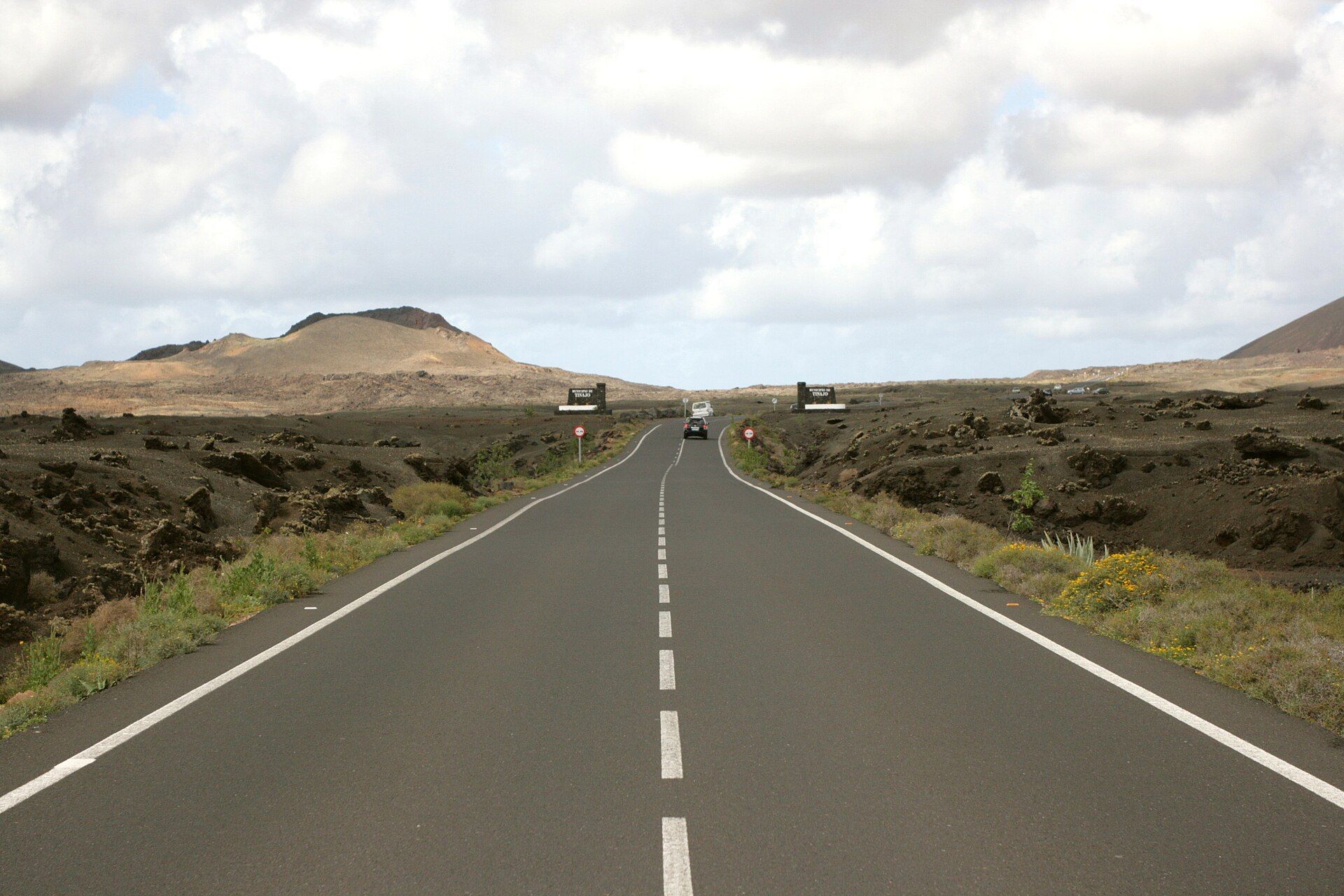
Cover photo: A road through volcanic terrain near Tinguatón, Lanzarote. Frank Vincentz · CC BY-SA 3.0.